
The Rental Property Tax Mistake That Often Shows Up at Retirement

Updated: Feb 17
How skipped depreciation, timing decisions, and Medicare thresholds quietly intersect for long-term rental owners

By Rich Arzaga, CFP®, CCIM, The Real Estate Whisperer®
Over the past 20+ years reviewing rental property outcomes, I’ve learned that the most important tax issues rarely show up during tax season.
They show up at transition.
Retirement. Sale of rental. Medicare. Or even an expected shift in lifestyle priorities.
That’s when quiet decisions made years earlier suddenly matter.
And one of the most common — though not universal — issues I encounter is surprisingly simple:
Depreciation was never taken.
“Rental property tax decisions are rarely isolated — they intersect with retirement timing, Medicare premiums, and long-term cash flow in ways most investors don’t see until transition.”
A Conversation That Changed Direction
A few years ago, I met with a couple — both 63, longtime California rental owners — who had owned two properties for nearly 20 years.
They were thoughtful. Conservative. Not speculative investors.
Cash was coming in. It often appeared to be a surplus. Major repairs would surface from time to time, and in those years, they assumed the property was simply “break-even.” That felt acceptable to them. Their goal was stability, not optimization. They weren’t trying to squeeze every dollar out of the properties. They just wanted to avoid unnecessary risk.
When we began planning, they were tired of active management and were considering retirement within a couple of years. I reviewed their tax returns.
They had self-prepared for years.
On Schedule E, something immediately stood out.
There was no depreciation.
Not for one year. Not for several.
When I asked about it, their answer was calm and sincere:
“We didn’t want to deal with recapture later. We figured if we never took it, we wouldn’t owe it.”
At the time, that felt harmless. There was no sale pending. Income-Related Monthly Adjustment Amount (IRMAA) wasn’t yet an issue. We planned to consider Roth conversions once they stopped working.
But when we ran the numbers, the picture shifted.
They had missed years of legitimate deductions — real dollars that could have reduced marginal tax rates and improved after-tax cash flow.
And recapture rules would still apply when the properties were sold.
Which, as it turned out, happened within eighteen months.
That meeting didn’t turn into a debate about tax forms.
It became a broader planning conversation — about equity efficiency, retirement income sequencing, Medicare timing, and how decisions made quietly over twenty years resurface at exactly the moment life is changing.
How Depreciation Gets Missed
In my experience, depreciation is omitted for three primary reasons.
First, self-prepared returns. Thoughtful tax software prompts for depreciation, but investors sometimes get impatient, unsure how to allocate land versus building, or uncomfortable answering follow-up questions. The section is skipped, with the intention of returning later.
Later rarely comes.
Second, professional preparation errors. It’s surprising when it happens in a professional setting, especially given how central depreciation is to rental property taxation. Larger firms working with more affluent clients sometimes rely on multiple layers of delegation, and review processes often miss foundational items.
Third, behavioral misunderstanding. Some investors become aware of depreciation recapture and decide that if they never claim depreciation, they can avoid the issue entirely.
In each case, it isn’t sophistication.
It’s human behavior.
Why Skipping Depreciation Feels Harmless — Until It Isn’t
When depreciation is skipped, nothing dramatic happens immediately.
There is no pending sale.
No urgent audit concern.
No visible penalty.
The property operates quietly.
But over time, three things occur:
Legitimate deductions are lost — along with the time value of money.
Marginal tax rates may be higher than necessary.
The basis must still be reduced by allowable depreciation, even if it was never claimed.
Under the “allowed or allowable” rule, the IRS reduces basis by the depreciation you were entitled to take — whether you took it or not. When the property is eventually sold, depreciation recapture still applies. Even if depreciation was never claimed, the basis is reduced by the amount that was allowable, meaning recapture is calculated as if it had been taken.
In addition, correcting missed depreciation can affect the timing and availability of suspended passive activity losses, further changing the net tax outcome in the year of sale or transition.
“You don’t avoid the future tax conversation by skipping depreciation. You simply give up the present benefit.”
Over years — especially decades — that affects real cash flow and long-term wealth accumulation.
The Overlooked Layer: Timing
Rental owners tend to focus on:
Maintaining or improving cash flow
Managing leverage
Watching appreciation
Avoiding unnecessary risk
What I see less often is measurement of cash flow against accumulated equity, or understanding how tax mechanics compound over time.
Depreciation isn’t just a line item.
It shapes:
Current marginal tax exposure
Future capital gains calculations
Net Investment Income Tax (NIIT) 3.8% exposure
Medicare IRMAA thresholds
Roth conversion strategy
Over the years, I’ve learned that rental property performance is shaped as much by unseen tax mechanics as by rent and appreciation.
“What feels fine year to year can look very different when modeled across retirement.”
Where Timing Changes Everything
This issue becomes most relevant at financial crossroads:
Approaching retirement
Planning a property sale
Considering a 1031 exchange
Beginning Roth conversion discussions
Nearing Medicare eligibility
Consider a few intersections:
If a property is sold in the same year as a Roth conversion, the interaction between gains, recapture, and conversion income can materially affect marginal brackets.
If a sale increases income enough to cross the 20% federal long-term capital gains bracket and triggers the 3.8% Net Investment Income Tax, the transaction's effective tax cost changes.
If income rises above IRMAA thresholds, Medicare premiums can increase — sometimes by thousands of dollars per year, per spouse — two years later.
These are not minor technical details.
They are lifecycle financial decisions.
Before Selling or Retiring: A Coordinated Review
Before you sell, refinance, or enter retirement, review:
Has depreciation been taken consistently and tracked?
Is the basis accurately calculated?
How would a sale of the property affect marginal tax brackets? Would it increase exposure to the 20% federal capital gains rate or introduce the 3.8% Medicare surcharge?
How would gains from this sale affect Medicare IRMAA two years later?
How can this interact with planned Roth conversions?
What is the long-term cash flow impact of keeping versus selling?
Rental property decisions do not exist in isolation. They intersect with retirement income planning, Medicare premiums, tax strategy, and legacy goals.
A Practical Starting Point
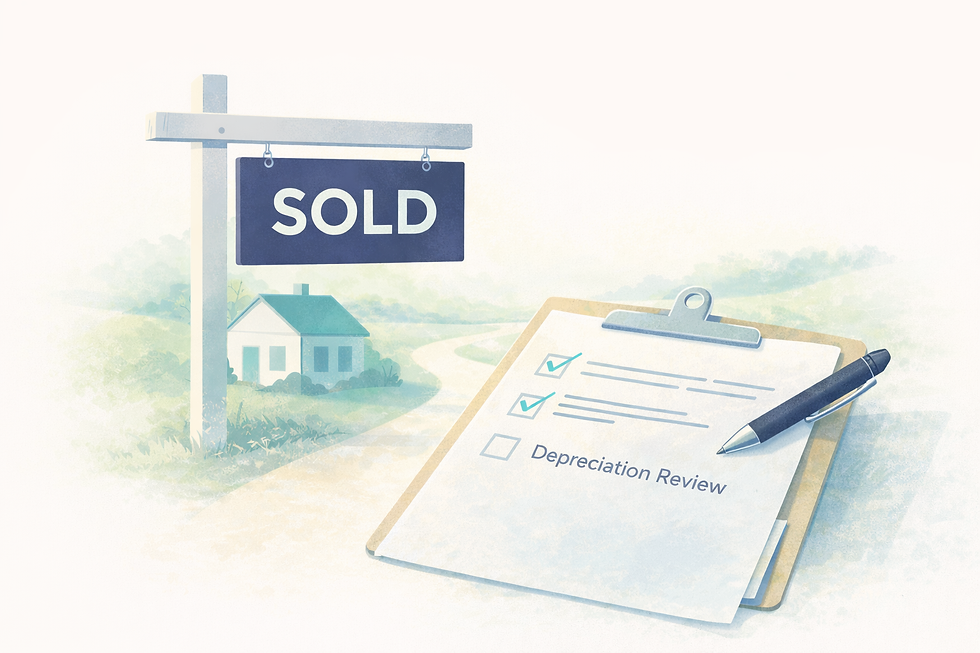
If you own rental property and are within five years of retirement — or considering a sale — I’ve created a short Rental Property Depreciation & Exit Timing Review Checklist that walks through the key areas to review.
It’s not technical. It doesn’t require tax software.
It helps you step back and ask whether depreciation, basis, and timing have been handled thoughtfully within your broader financial plan.
Sometimes clarity begins with better questions.
What Comes Next
In the articles that follow, I’ll address:
Because what appears to be a simple tax oversight often reveals something deeper: A gap between annual tax preparation and long-term financial planning.
And that gap tends to show up at transition.
Authored by Rich Arzaga, CFP®, CCIM, Founder, The Real Estate Whisperer® Financial Planning. Helping clients and advisors integrate real estate into holistic financial plans.


Comments